When Fiber Breaks
Outages are frustrating. We know. This page explains why fiber damage happens, what the repair process looks like, and why it sometimes takes longer than you would expect.
Why fiber gets damaged.
Fiber optic cables are glass — strong in tension but fragile when cut, crushed, or burned. Here are the most common causes of damage we deal with.
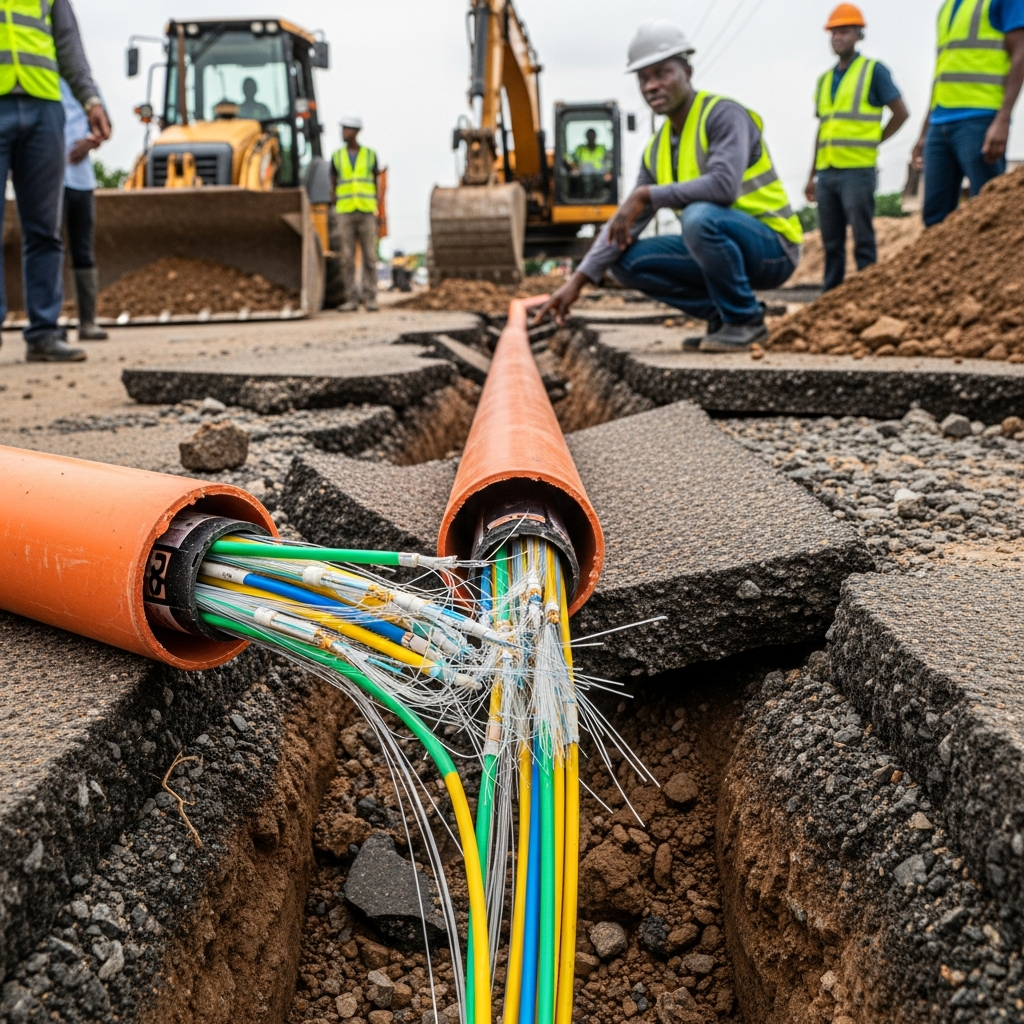
Road construction
The number one cause of fiber outages. Government or private road works cut through underground fiber conduits. Excavation crews often do not check for buried utilities before digging. A single backhoe strike can sever cables serving hundreds of customers. We work to register our cable routes with authorities, but enforcement is inconsistent.
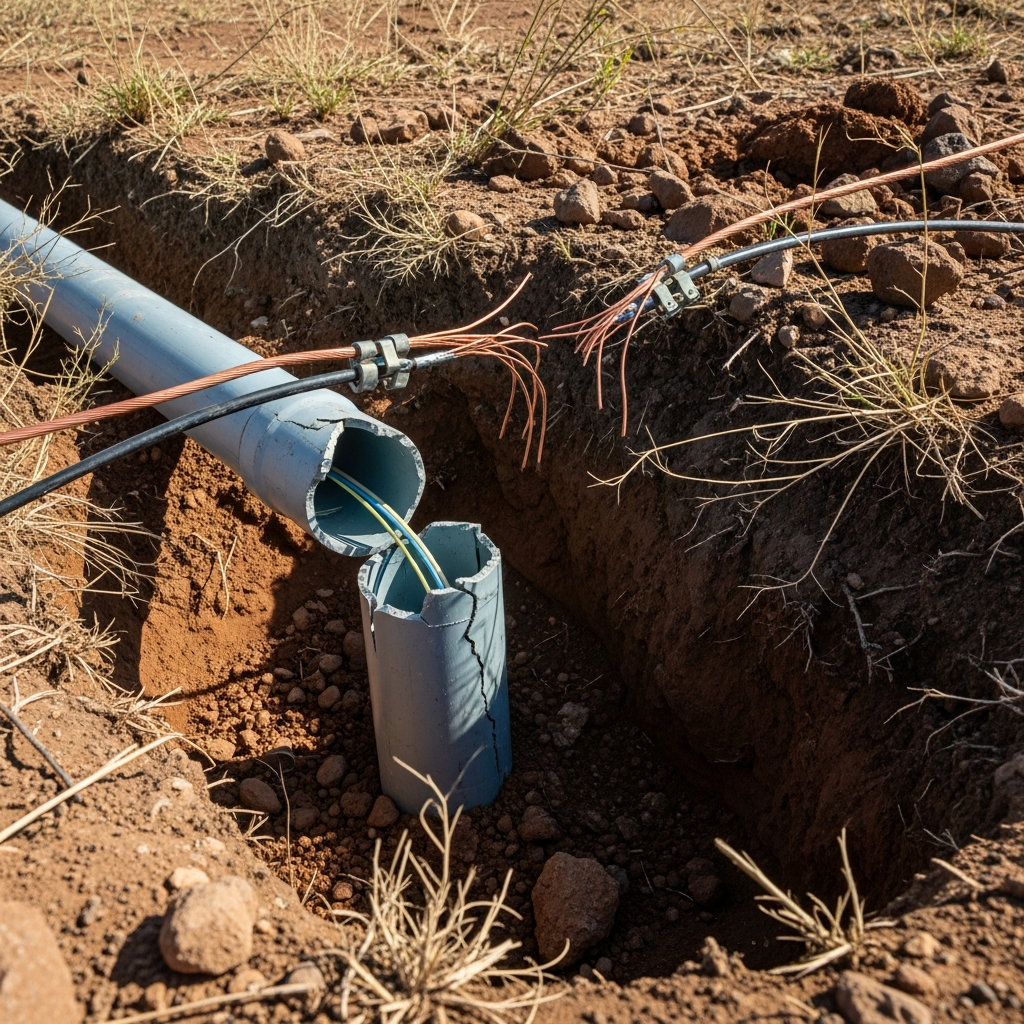
Cable theft and vandalism
Criminals steal fiber cable — and especially the copper earth wire that protects it — for scrap value. This typically happens overnight. Entire cable spans can be stolen in a single incident. Aerial cables on poles are particularly vulnerable. Vandalism and sabotage also occur, sometimes targeting specific routes. Prevention is difficult; the best defense is route redundancy.
Fire
Bush fires during dry season, building fires, and electrical fires can melt or destroy both aerial and underground fiber. Aerial cables along roads are especially vulnerable to grass fires. Underground cables can be damaged when fire melts conduit entry points or junction boxes. Fire damage often requires full cable replacement, not just splicing.
Flooding
Heavy rains flood manholes and underground ducts, submerging splice points and junction boxes. Water ingress damages splice closures and can corrode connectors over time. In extreme cases, floodwater physically displaces cables from ducts. Flood damage is often only discovered after water recedes, delaying the repair timeline.
Third-party utility works
Water, electricity, and drainage companies digging near our fiber routes can accidentally cut cables. Unlike road construction, these are often smaller, targeted digs that are harder to anticipate. We coordinate with utility companies where possible, but accidental cuts remain common.
Vehicle and mechanical damage
Trucks hitting aerial cables or the poles carrying them. Heavy vehicles crushing shallow underground conduits. Construction equipment snagging cables. Fallen trees during storms bringing down aerial fiber. Each incident requires physical repair at the damage location.
How we find and fix the break.
From detection to restoration — what happens when your connection goes down.
Fault detection
Our NOC (Network Operations Center) monitors all fiber routes 24/7. When a cable is cut, we see signal loss alarms within seconds. Many faults are detected before customers even notice.
Fault location
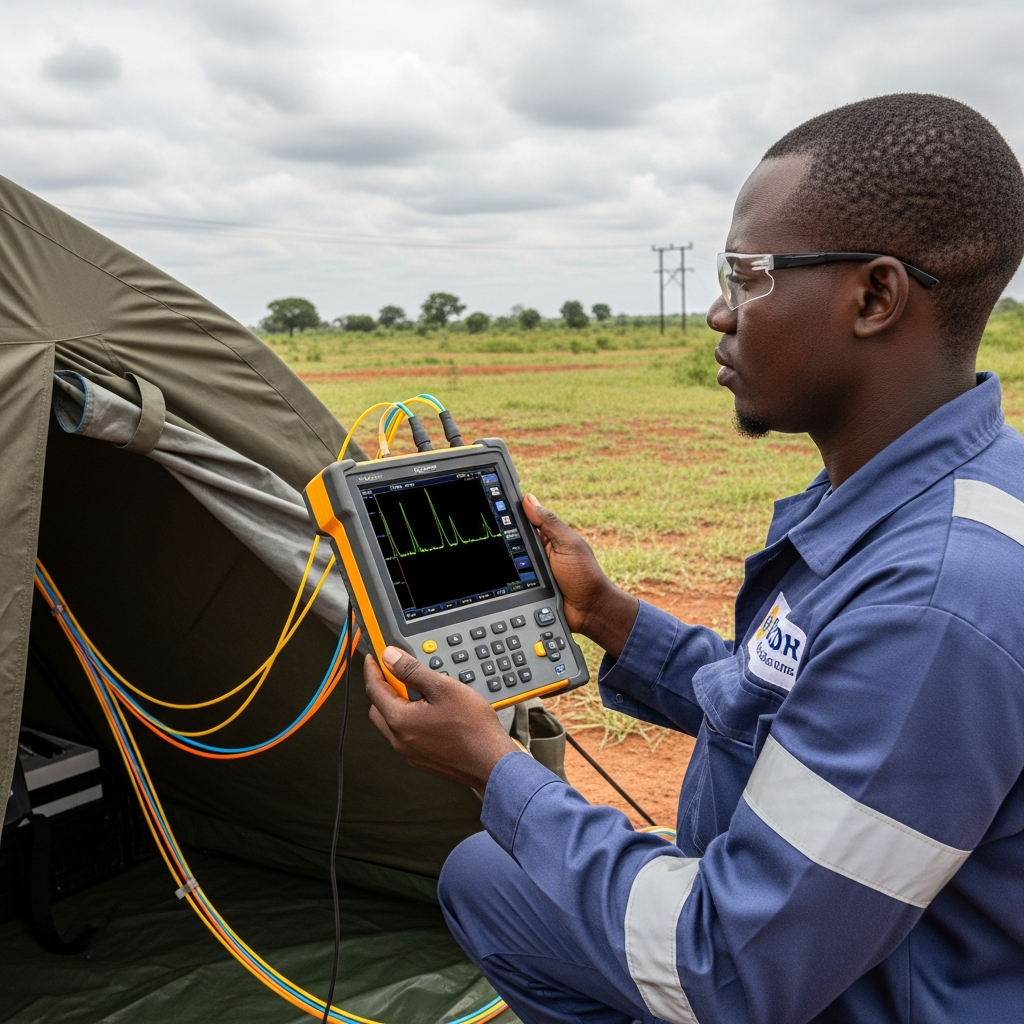
An OTDR (Optical Time Domain Reflectometer) fires light pulses into the fiber and measures reflections. This tells us the exact distance to the break — down to a few meters. We test from both ends of the cable to pinpoint the location precisely.
Crew dispatch
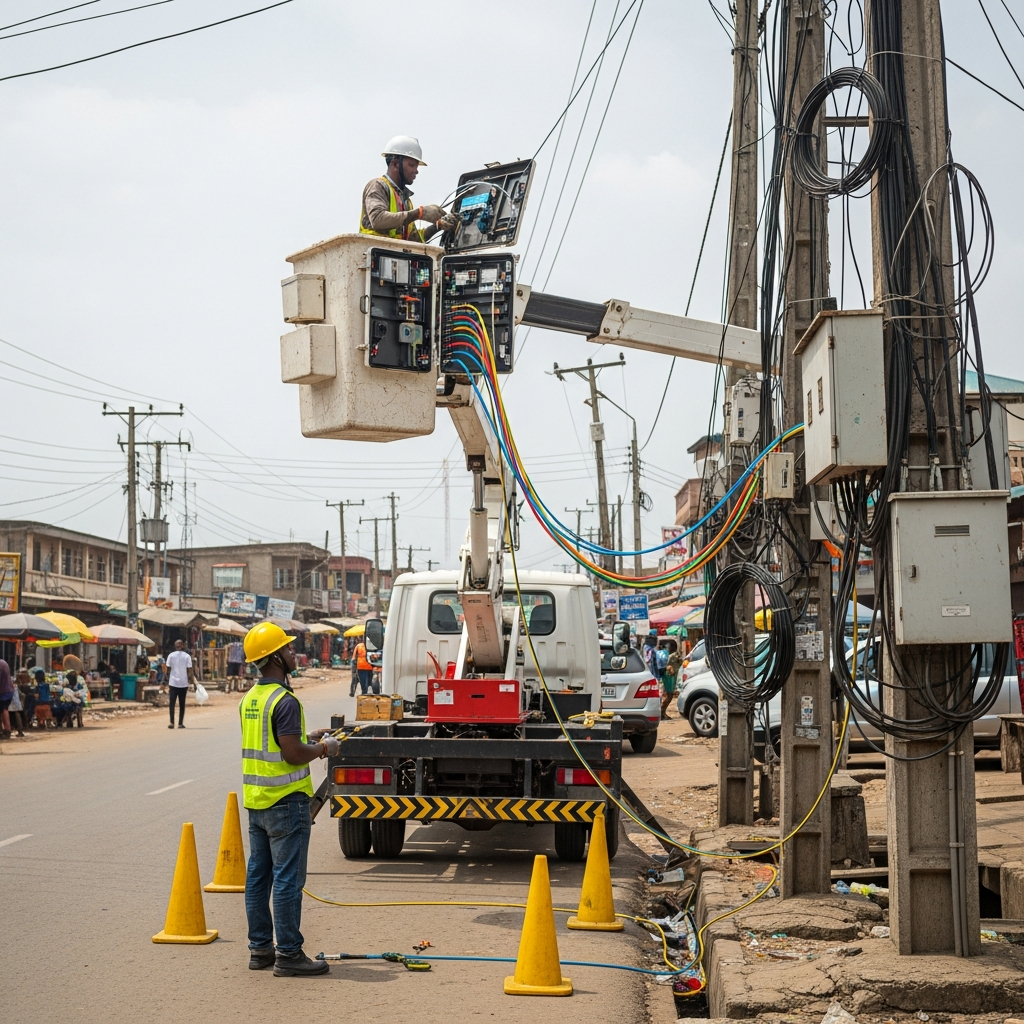
A repair crew is dispatched with a fusion splicer, OTDR, replacement cable, tools, and safety equipment. The crew must travel to the exact break location, which may be in a remote area, under a road, or on a pole.
Site assessment
The crew assesses the damage: Is it a clean cut (simple splice) or a destroyed section (cable replacement needed)? Is the conduit intact? Are there multiple break points? Is the area safe to work in?
Repair
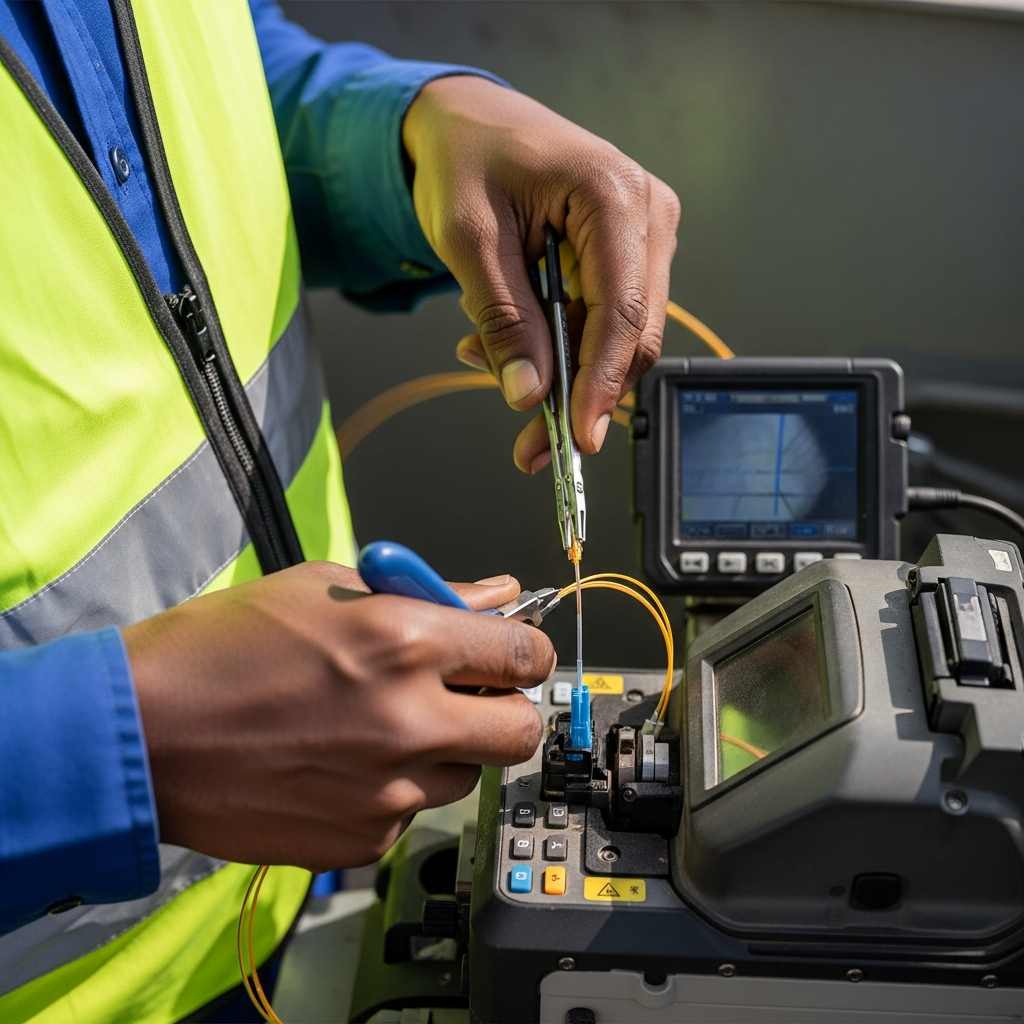
For a clean break: fusion splicing joins the fiber ends at approximately 1,800 degrees Celsius. Each individual fiber strand must be spliced separately — a 48-strand cable requires 48 individual splices. For destroyed sections: new cable is pulled through conduit or strung aerially, then spliced at both ends.
Testing
After repair, the full route is tested with OTDR to verify signal quality. Power levels are measured at customer endpoints. The repair must meet specifications before service is restored.
Service restoration
Customers are brought back online. We monitor the repaired route for stability over the following hours. If multiple breaks exist, the process repeats for each one.
Why repairs take time.
We understand the frustration. Here is an honest explanation of the challenges our field teams face.
Daytime work only
Field crews cannot work at night in most Nigerian locations. Security risks — armed robbery, kidnapping threats on highways and remote areas — make night work dangerous. Environmental challenges (no street lighting, flooding, insects, snakes in rural areas) compound the risk. This means a fault detected at 8pm cannot be repaired until the next morning, adding 10-12 hours to the resolution time.
Access and permissions
The damaged cable may be under a busy road that requires traffic management. It may be inside a locked estate, government compound, or private property that requires permission to enter. Accessing aerial cables needs a bucket truck which may need road closure. Getting these approvals takes hours to days.
Multiple break points
A single construction incident can create several breaks along a cable route. Each must be individually located, accessed, and repaired. A "simple" fault can turn into a multi-day repair if damage is extensive. The OTDR only shows the nearest break — further breaks are only revealed after the first one is fixed.
Cable replacement
If cable is stolen or destroyed over a long section (50m, 100m, or more), replacement cable must be sourced and transported. This is not always in stock — specialized cable may need to be ordered. Pulling new cable through conduit or stringing it aerially is time-consuming physical work.
Weather delays
Heavy rain halts repair work — outdoor fiber splicing requires dry conditions (moisture causes splice failures). Underground conduit work cannot proceed in flooded areas. Rainy season significantly increases both the number of faults and the time to repair them.
Priority and sequencing
When a backbone cable serving thousands of customers breaks at the same time as a last-mile cable serving ten customers, the backbone gets repaired first. This is not neglect — it is triage. We restore the most customers as quickly as possible, then work down to individual connections.
What we do to minimize downtime
- 24/7 NOC monitoring with automatic fault detection — we often know before you do
- Multiple repair crews on standby in Abuja and Lagos
- Spare cable and equipment pre-positioned for common repairs
- Redundant fiber routes where possible (ring topology) so traffic can reroute around a break
- Route diversity for critical customers — dual-path fiber on separate physical routes
- Regular cable route patrols to detect potential issues before they cause outages
- Coordination with construction companies and utility providers for advance notification of works near our routes
What you can do
- Report faults immediately — the sooner we know, the sooner we dispatch
- Check with neighbors — if they are also down, it is likely a cable fault not your equipment
- Keep your account active so we can track and prioritize your ticket
- Consider backup connectivity (wireless or satellite) if your business cannot tolerate outages
- Report suspicious activity near fiber infrastructure — cable theft prevention helps everyone
- Be patient during rainy season — fault rates increase and repairs take longer
How to reach us.
Multiple ways to report an issue. Include your name, account number or address, and when the fault started.
Fastest way to report a fault. Send your details and we will log a ticket immediately.
+234 812 117 9536 →Phone
Call our support line for urgent faults or if you need to speak with someone.
+234 812 117 9536 →Need backup connectivity?
If your business cannot tolerate fiber outages, we can add wireless or satellite backup. Talk to our team about redundant connectivity options.